


Let us start with a question that comes up quite often in today’s world of books and publishing. At the current stage of technological development, is it still worth reading the written word when it contains no visual or graphic elements? Just words, printed on good old-fashioned paper?
I do not merely think it is worth reading. I dare say it is essential.
Why?
Let’s see. Perhaps to preserve the human culture that has separated us from animals and made us “civilised”, as we so proudly like to tell ourselves? To preserve reason amid the flood of idiotic TikTok and other wannabe entertaining and advertising content that dulls the mind and irreversibly deepens the normalization of primitive materialism?
Any other justification?
Yes. How about simple, down-to-earth common sense.
Surely you have been asked at some point:
“Did you see the film?”
And then came the answer:
“Yeah, but the book is a thousand times better!”
Well. That is why.
Paper Speaks Louder Than the Screen
Nothing tells stories or lays bare the depths of the human inner world quite like the written word created by a creative mind.
No video or film can awaken quite as many emotions in us as a book can. Between the lines of a sentence, there is an enormous amount of room for imagination.
Descriptions of the main character make each of us see them slightly differently … in our own way … The same goes for descriptions of mountains, forests, capitals or a simple little seaside village. Every detail creates a new, almost tangible atmosphere in our minds, making the heart tremble. It evokes a smell, an association, a long-forgotten memory …
Whole Worlds Live Between the Lines!

Video content can dull us, leave us empty, because it draws everything for us in painstaking detail, exactly as someone else saw the scene.
There is little room left for our own brainwaves to do their work.
The written word brings us to life. It fills us with energy and imagination. It allows us to create an inner world that we can freely walk through and explore, at our own pace and according to our own instincts and perceptions.
Of course I watch television too. Films, documentaries, series … They are so technologically sophisticated that they can instantly transport you into another time and place. All those sounds, images, countless effects … I love them.
But not a single piece of visual content has ever drawn me in as deeply as a book has. Not deeply enough to make me look for excuses to abandon whatever work I was doing so that I could return to the written word.
Written stories are the ones that lift us the highest. They awaken deep emotions. They awaken empathy. They awaken the human in us.
Books teach us and enrich us from within. They open new horizons and new perspectives. They confront us with experiences and situations we may never have lived through ourselves. They encourage us to discover previously unknown parts of ourselves.
They build mosaics, then tear them apart, and create entirely new images from the pieces.
To me, these are the priceless “abilities” of books. Through them, we can contribute to the growth of this and future generations of humanity.
Some (Modern) Traps of Writing
Where does a writer find the motivation to actually publish their creative or personal work?
Probably not in the expectation of great financial gain or financial security — the things we so eagerly pursue. It is almost impossible for everyone who loves creating with words to make a living from it. Far too many social and personal factors come into play. Statistically speaking, only a small number succeed. And even those who do nowadays need either a little luck, some financial backing from the start, or something truly exceptional, unusual, tragic, outrageous … or all of the above, seasoned with a pinch of unwavering persistence, inexhaustible energy, reckless courage and a supportive environment.
But there are other, less obvious reasons too. Quieter ones. Personal ones. Hidden ones. I have been discovering some of them myself as I try to pave my professional path as a writer.
I have noticed that I cannot help searching for like-minded people and approval through my words. Even though I consciously know that my views, reflections and writing cannot possibly convince everyone, subconsciously I still want to be accepted by my readers. I want to please them, and I feel that only then could I truly feel comfortable in my own skin.
Human … understandable …
And yet.
I keep wondering whether that really has to be the case, or whether I can somehow “reprogram” myself.
The Dilemma of Exposing One’s Inner World to the Outside World

Can I protect myself from negative comments and criticism enough to still live a fulfilling life? Can I transform the constant stream of negative external stimuli into lessons that do not hurt me so deeply that, one day, I start believing them myself and accepting them as truth?
Well.
That is my dilemma.
Not necessarily anyone else’s.
But one thing is certainly true.
A writer, even when writing fiction, reveals a small part of themselves in their work.
If we want our writing to be honest and authentic, we have to draw from ourselves. From our perceptions, thoughts, knowledge, emotions and experiences of the world and the events unfolding within it.
Putting our “naked” selves on a plate and serving ourselves to this bloodthirsty, thoughtless and judgmental society is quite a courageous act, isn’t it?
Think about it.
If you are actively present on social media, if you do not remain silent and you speak openly about social issues, how many times have you shared an inspiration, a wish, a thought, a personal story — only to receive misunderstanding in return?
At least from some unknown person hiding behind a made-up, devious profile?
Perhaps a nasty, intolerant comment? Accusations, slander, verbal aggression?
Even though all you wanted to do was offer something positive, something to think about, without directly attacking anyone.
Or perhaps you know someone to whom this happens.
And even if you have wisely distanced yourself from social media, how many times have you been criticised or talked about — openly or behind your back — by people you know in some way, but do not really know? And they know you even less.
And if you are completely honest with yourself, do you really not care at all?
Can you make everything negative that is said about you simply pass you by?
Because even if it passes you by, it inevitably passes through you first.
Does it leave something behind? Somewhere deep inside, almost imperceptibly, does it gnaw at you?
Unfounded Judgement & Prejudice — A Constant of an (Immature) Society
I admit it.
I have never learned how to deal effectively with other people’s unfounded, openly expressed intolerance towards me. Perhaps because I am not someone who hides behind my mistakes. I admit them. And I have no difficulty apologising. That is why I find it so difficult to deal with the fact that some people simply do not do the same. That so many never stop … They never look inward. They never look beyond stereotypes and prejudice. They do not know how to truly listen to anyone.
It stresses me out.
When someone is intolerant towards me, I am immediately overwhelmed by a lead-heavy sense of threat. My defence mechanism kicks in, and it is mostly not an extroverted one. I cannot simply “explode” back at them uncontrollably … Well, except every now and then 😉.
More often, it takes the form of nervous silence, overthinking and caution. That is not necessarily a bad thing, but I have noticed that over time it increasingly deepens my disappointment in humanity — and in myself. So I retreat into my inner world. I feel detached, as if I do not belong on this planet, and I find it increasingly difficult to share my inner experiences with others. Past experiences of feeling hurt and misunderstood have cut deep, and I allowed them to push me to the margins.
The fear of rejection and intolerance has become greater than the fear of loneliness.

The Weight of “Forced” Silence
Do you know that feeling when you want to express yourself, but one obstacle after another stops you? When you want to say something out loud, but you fall silent. Or perhaps you even nod slightly … agreeing with something you actually disagree with.
For the sake of peace.
Because in that moment, you do not feel capable of “fighting” with the person in front of you. Maybe you cannot find the right words, and you already suspect that you would lose the verbal battle.
And then a little voice whispers:
“It’s pointless. Let it go.”
And later you catch yourself burning inside.
The dialogue that should have happened out loud now takes place inside your head. You repeat the words you wanted to say. You imagine the words that might have been thrown back at you. You turn over and over what should have been said, what should not have been said, what would have been right …
Again and again.
And there seems to be no end to it.
- Is that good or bad for you? And what about the other person?
When we allow our fears to restrict our actions too much, things begin to accumulate inside us. When we spend a long time feeling that nobody understands us or listens to us, and therefore remain silent as the grave, it affects our psychological and physical wellbeing.
Thoughts and emotions pile up inside us and become an increasingly heavy burden — like a weight at the gym that we keep adding kilos to, even though we are not training enough to be ready for the load.
And then, perhaps suddenly, when we least expect it, our knees give way.
Just as the accumulation of the unspoken affects an individual, the accumulation of the unexpressed affects a writer. That is why a writer simply HAS to write.
Support content creation by donating a symbolic amount
Creating an Understanding Monologue in Silence
Now imagine a “space” where, at any moment, you can throw out everything that is in your head. Instantly.
And on the other side, without judgement, there is someone listening. Someone offering support. Someone who talks to you respectfully, no matter what you have to say. Someone who tries to understand you, to put themselves in your shoes, and to guide you safely through the hurricane of emotions and thoughts raging inside you.
Wonderful, isn’t it?
- Do you have such a space? Such a listener?
We Can All Have Such a Listener.
When I was younger, I waited to meet the person who would become my listener.
Then, over the years, I gradually began to realise that this person in physical form was somehow eluding me. Or perhaps I was eluding them? The answer to why is still blurry. And yet, I automatically keep looking for this unrealised “space” in a Person.
At the same time, I retreat inward. And I often catch myself having fascinating inner monologues.
Inner Monologues in Stormy Moments
They can be intensely negative and short-lived states — moments of anger, rage, disappointment, despair, extreme pessimism — or positive ones: moments of exhilaration, crazy ideas, complete relaxation, wildly optimistic thoughts without much rational basis, explosive energy …
When I analyse one of my own negative stormy states, it goes something like this:
When I release the sudden, unrestrained emotions within me — when I allow them to come out in some physical form, tears, for instance — I somehow relieve the sense of threat that lies behind them, where my EGO is standing guard.
In the next phase, I can more easily become aware of and identify these feelings with the help of REASON.
I might say to myself:
I feel lonely and insignificant. I feel as if the whole world is against me.
The ego’s pain remains.
But in exchange for becoming conscious of that intense emotional state, I gain something else: the attention and understanding of another, gentler and more compassionate voice within me.
I assume it comes from the SOUL.
As time slips through my fingers, the original thoughts and emotions gradually take on a different shape and colour.
Warm tones begin to appear. The storm slowly subsides.
Reflection, in harmony with the inner voice of universal love, even without a physical conversation partner, gradually calms the original notes of aggressive emotion and thought. Other aspects begin to emerge — ones that allow me to reach a different conclusion on my own.
A new truth.
A new insight.
And yet I am still the same me, with all my emotions, senses, thoughts and intuition.
Just in a different, calmer moment.
Does any of this make sense to you?
Can you believe that your soul might gradually open your eyes even in the midst of the greatest anger and disappointment, guiding you towards a better understanding of what is happening inside you?
That your present feelings are not your permanent identity, but simply you in this moment, right now? That over time you may be able to look at exactly the same situation from a broader perspective, through different eyes and even with slightly different emotions?
But …

The Best Stories Do Not Wait for the Storm to Pass — They Are Born in the Storm
Let us return to literature.
Great, penetrating works of literary art are not born after the storm. They are born while it is raging.
When thoughts and emotions are at their most turbulent, when they are most energetic, almost tangible, they can be bright and radiant, something to be proud of — or dark, ugly and worthy of condemnation.
I too find my greatest inspiration in such moments. In the rush of emotions and thoughts raging inside me, which sometimes I am truly not proud of, and sometimes become a source of encouragement.
Pouring words onto paper becomes the physical expression of vivid inner conversations. The ego spits fire — bright or dark. The mind throws thoughts around uncontrollably.
And the soul patiently listens and understands. It does not judge. It does not condemn.
The soul will remain silent and stand by me. But what about the outside world?
After the Storm
When the turmoil settles, when the raw piece of writing has been put onto the page, I understand all too well the old wisdom that tells us it is wise to sleep on things before acting.
No matter what form a thought born from intense emotion takes, it is never quite the same when I encounter it again in a different state of mind. It is no longer as deep, vivid, radiant, dark, glamorous, unique … Nor does it seem as obvious, pure, untouched, human. Primal, if you will.
Once my rational mind has processed it and reshaped it in every possible way, it becomes very difficult to return it to a form that would be socially correct, perfect and safe enough to release into the world. Of course, the soul has already withdrawn long ago, because it has little interest in my rational elaborations.
And then I wonder how that is possible. How could the thought or idea, or that sudden emotion, have been so clear, so obvious, so perfect, uncomplicated and logical when it first appeared?
But by then, it is too late.
The depth of that inner experience — so unique and unrepeatable, so unmistakably human — has slipped away unnoticed.
Unless I gave it words first.
In the Middle of the Hurricane
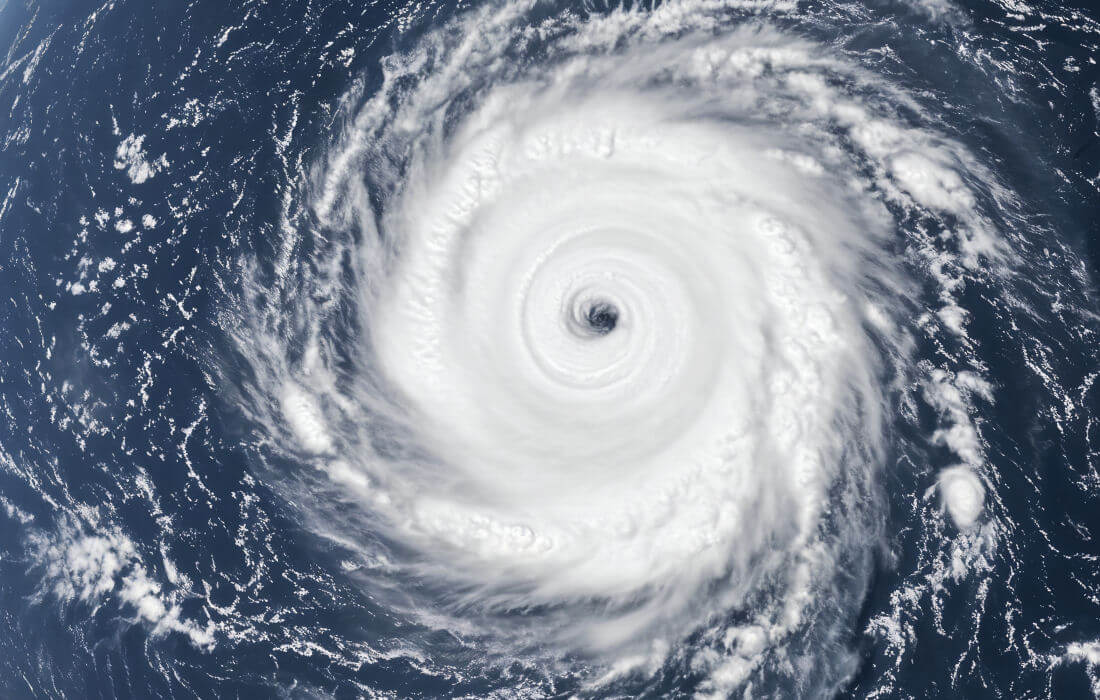
Within the storm raging inside us — so beautifully represented by the metaphor of a hurricane — there are often raw ideas hiding there, still unformed and least contaminated by social representations, discourses and stereotypes.
How can we imagine this? What does the metaphor of the hurricane mean to me?
Inside the circular vortex of the hurricane, where the strongest winds tear through everything in their path and cause the greatest destruction, deep emotions and primal, almost instinctive thoughts are raging.
At the very centre of the hurricane — in its calm, quiet and clear eye — the soul rests gently, speaking through intuition, the sixth sense and universal love.
The whole thing — the hurricane as a whole — represents our immediate inner state, in which there is very little time for logic and reason to speak.
It is about survival. Raw, uncontrolled forces of nature raging inside us. And if we allow them to, they can offer us raw perspectives on our existence and on the existence of the universe — perspectives least tainted by social assumptions.
But just as the raging hurricane is terrifying, so too is the idea of accepting something undefined and incomprehensible.

As the hurricane begins to weaken, our reason is already switched on, processing everything like a computer. Our ideas are caught in discursive logic.
In the logic of pure reason.
As we place events, states and emotions into that logic, we gradually calm down, because when we understand something, we feel safer. The world is categorised again. Understandable again. Well … at least we think it is. And everything is fine.
Except that this is only an illusion. The world is far too complex and vast for our minds to understand or explain everything that is happening within it. It is neatly compartmentalised in our heads — but not actually in reality.
Absolute, complete and correct understanding of people, situations, states and events is an unattainable desire.
And yet it is precisely those areas that we initially experience as frightening but profoundly fascinating — areas not yet explained, not yet polished by reason, barely captured by discursive logic — that are an endless source of written words capable of inspiring readers.
They are like a dormant volcano suddenly erupting, throwing vivid orange lava into the air. Around the volcanic crater, beautiful yet deadly sparks ignite, sending living creatures into a blind panic. They run and run …
until they suddenly realise the burning lava will not reach them.
Then they stop for a moment. Turn around. And gaze at the untamed magnificence of nature.
What could be more inspiring than seeing something so incredibly alive and unconstrained? The sleeping, boring black rock of a dormant volcano?
I don’t think so.
Sometimes, willingly or unwillingly, writers allow themselves to drown in hurricanes of emotion. We stop in the calm and feel the force of the raging wind — or the breathtaking explosion of a volcano — so that we can, even if only approximately, touch with the distant tip of our little finger the unframed, unformed sounds of the soul.
And then pour them into tangible form. Into Writing.

Rising Above Doubts and Fears
It is not always easy for a writer who wants to be penetrating, interesting, witty and impossible to place neatly into a box. A writer who instinctively feels compelled to share their primary — and sometimes even primitive — emotions or thoughts that contradict the dominant social current.
But, in truth, there is no choice.
They have to undress before the world.
How else could they move boundaries? Raise awareness? Break apart and expand the ideological, stereotypical and discursive traps in which we are unknowingly caught?
And here the answer to the dilemma about exposing ourselves to a society that likes to present itself outwardly as righteous, morally and ethically perfect almost answers itself. A society that constantly looks for sacrificial lambs onto which it can pour its filth … A society that has always been hungry for judgement, revenge and even blood. Only today, almost every individual has convenient — even free — tools with which to do it publicly, on a massive scale and without fear of punishment. Social media.
The answer is simple.
It is worth it.
As content creators, we must at least try to rise above our own doubts and fears. We must learn how to deal with the unwanted, superficial labels society places upon us. Because if we want to strive towards art that changes the world — art that relentlessly pushes humanity towards ever-expanding horizons of individual and collective growth — we have to do so.
Perhaps one day we will move beyond crude polarities such as “us” and “them”. Perhaps we will slowly rise above the ideologies of capitalism, globalism and materialism.
And do you know what is most beautiful of all? Every single one of us can be a creator of the written word.

So Who Is Still Fearlessly Chasing Words (and Dreams) on Paper?
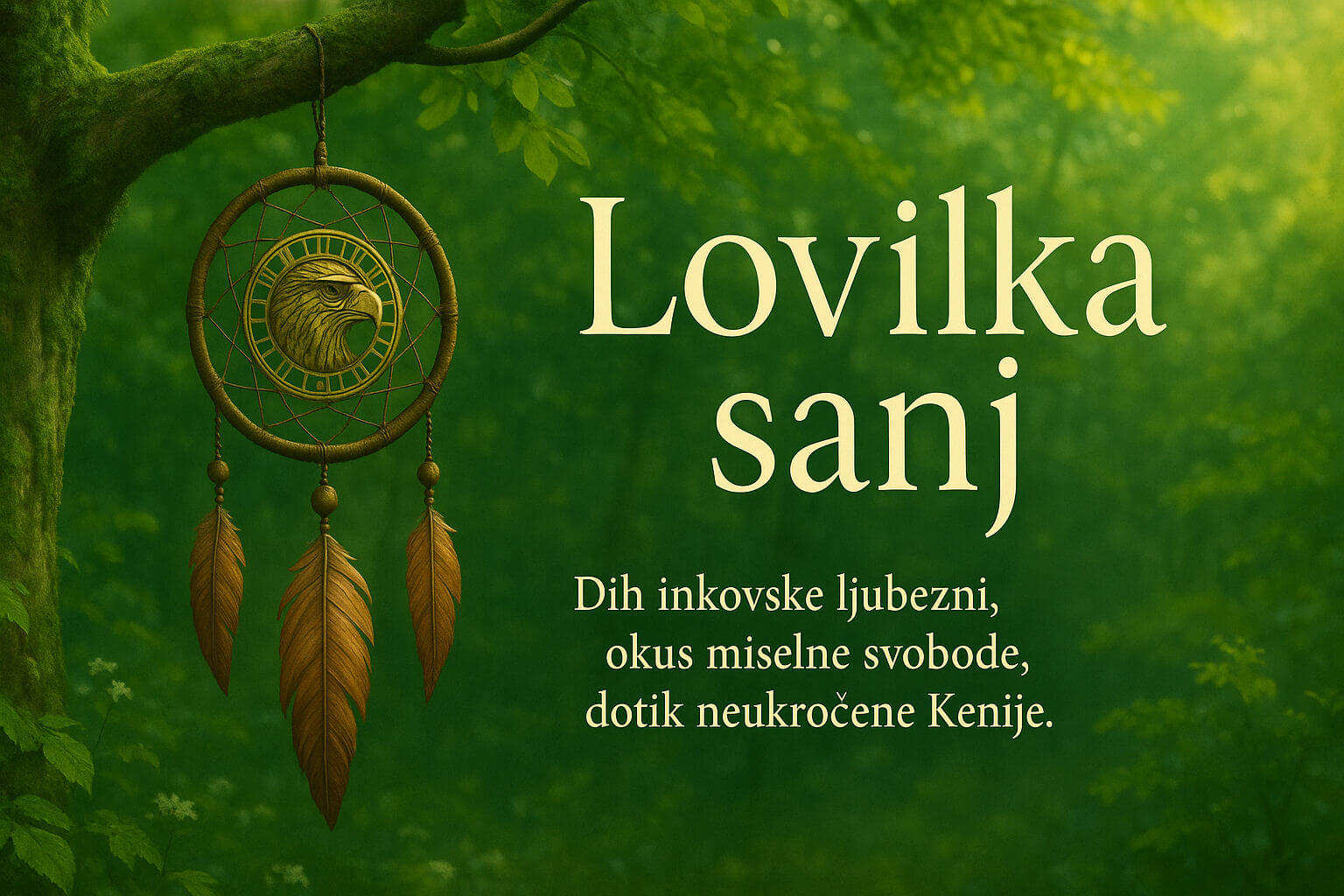
Nine years ago, I published my debut novel, Lovilka sanj — Dream Chaser.
I self-published it because, at one point, I believed I could convince an audience with my story. I believed the book was worth reading. That it was worth picking up and opening. Somewhere deep inside, I still believed in my own version of a dream — a world that recognises what is good and rewards it.
Black and white.
Even though in the novel itself I wrote about the fact that black and white does not actually exist. It exists as fiction in our minds. As a way of simplifying the world and putting everything into neat little compartments so that we can feel safe and comfortable. Worthwhile.
I was convinced there would be a circle of people who would support me unconditionally and encourage me not to give up, even though the road to recognition would be difficult.
And I did have that circle of people.
To everyone who was with me back then, thank you for helping and supporting me while I was chasing my dreams. Although I did not chase them fearlessly, I still reached quite a few peaks and received opinions and recognition I never expected. The memories of that period after the book was published are still very much alive. And I am grateful for every moment.
Labels & the Generalised Assignment of Traits
When the book came out in December 2016, I was extremely proud of it.
But …
I was afraid to take it out into the world on my own. I was only beginning to learn how to use social media for promotion, and I had poured every bit of my inner world that I possessed at the time into that book. Given the positive reactions from readers before publication, I wanted to believe that my work was valuable enough that someone else would also invest in helping it become known — not just me. Looking back now, I understand that this was an overly lofty assumption. And there I was, full of doubts and negative thoughts, approaching the promotion of my book with hesitation.
Will I sell anything? Am I ready to share my story with strangers?
If I am completely honest, at that moment I wasn’t.
Why?
Mainly because of one burning question:
“What will people think of me?”
The answers kept buzzing around in my head:
“How stupidly she thinks and sees life.”
“How naive.”
“How silly.”
“Unrealistic.”
“Childish.”
Negative Labels — the labels I had placed on myself.
And along with them came a note that kept gnawing at me and preventing me from taking aligned action. I was somehow at odds with myself, which meant that even help could not reach me in the form I wanted it to. Perhaps that is simply how this vast universe works. It taught me that, in my case, only complete dedication to the goal would work. Without doubts and fears.
I wanted to succeed. To be convincing, professional, human, warm-hearted, open, fearless, confident … I wanted to put on those positive labels, not the previous, less attractive ones. But it simply did not work.
By the way, for readers who are unfamiliar with the subjects of labelling, prejudice and stereotypes, I asked artificial intelligence to give me a simple and concise explanation of these concepts, using everyday examples. You can read it HERE, if you are interested and not too bored by the topic. Understanding the differences between these concepts certainly makes the rest of this article more enjoyable.😉📖
The book was written during a period of my life that now feels quite far away. And yet the period itself is not really that distant. It is the story that feels far away.
My heartfelt, honest writings from Lovilka sanj now seem like the life of someone else. The life of another person. Or perhaps my own life in another body, in another dimension? Not something I experienced and thought about myself, but something someone else did …
All the writing is still clear and meaningful. It is still mine. And yet somehow it no longer really feels like mine.
Another Life?
It is not another life. I have not become a different person, nor have I changed so dramatically that I no longer recognise myself. Time and circumstances have simply made sure that I forgot, to some extent, who I used to be. Back then, I felt that memories, the past, and my reactions and feelings towards them were building my identity — something that would accompany me throughout my entire life. This is me. Period. Crying, overly emotional and vulnerable, introverted, reflective, romantic …
Today, now that I live with greater awareness of the here and now, I understand that my identity is not fixed. I am not defined by those personality traits that I assigned to myself, or that other people openly stuck onto me through their opinions.
Labelling is neither final nor necessarily accurate. And yet, to some extent, it is necessary and unavoidable when we try to make sense of the world, society and events around us. It is a simplification of a complex world. A mental industry for manufacturing “truths” which, because of their simplicity, are often less like truths and more like boxes into which we place thoughts and feelings so that we can make sense of our lives.
That is why it matters to understand what labels really are.
Labels.
Not objective, complete, self-evident and unchangeable truths.
Every day, as I overcome challenges and gain new experiences, I also change little by little. And my identity — the adjectives I would once have used to describe myself, or that others would have used to describe me — may have been valid once. But at this very moment, I may already be completely different. I may describe myself with completely new adjectives … Or perhaps with the same ones, but understand them differently. And I can even convince other people of that, because labels work. They put things into boxes. They generalise highly complex states, traits and events that create discomfort within us.
Once we put a particular insight into the appropriate mental drawer in our minds, our subconscious reacts:
“Aha! Now I understand!”
And suddenly we feel safer. And smarter.
We need to make sense of our own actions and behaviours, as well as those of others. And what describes them better than a label we place on ourselves or on someone else?
Unfortunately, when we stick on a label, the story too often ends there.
We replace the label with a non-generalised and unchanging whole — a truth. And if that label carries a negative connotation, as so often happens, it can have a profound influence on someone’s life.
A Label as a Starting Point on the Journey of Learning
I have chosen a different path.
I have decided not to define myself so much by the labels that have been stuck onto me. For example, that I am too sensitive. That I do not know how to cope with stress. If I become aware of such a label as something that describes me at a given moment, I can work towards changing it — if that is truly what I want.
My present and past labels, some of which I used to regard as “personality flaws”, are not flaws. They are reference points. Starting points beneath which I can write whatever new story I choose. They are starting points on my journey of learning.
Why should I be burdened by labels that do not remotely reflect the truth?
- So Is It Possible to Accept Other People’s Criticism and Disapproval in the Same Way — as Labels — and Transform Them into Personal Growth?
Criticism and all the other indifferent, ugly, rude, well-meaning, justified and unjustified remarks will always be there. Believing otherwise is probably naive.
But what about accepting them as an unavoidable piece of the mosaic that makes up our path of personal growth? Is that naive too?
It depends on the strength of our own ego, and also on how aware we are of ourselves and of the “problem” created by the ego. For me, they ARE part of the mosaic, because I can learn so much from them — about myself and about how society works.
Praise feeds the ego. Criticism wounds it. Yes. It wounds the EGO … Not the soul. Not my essence. When the ego is wounded, I automatically become afraid of facing criticism. I try to protect myself from something that, at that moment, only appears to threaten me. Because for the ego, the threat is very real. Our ancient brain instinctively experiences it almost like a threat to our survival.
Then the task falls to us: do we become conscious of what the ego is doing? And, consequently, do we take responsibility for whether we will allow the accumulation of that existential fear to harm us in the long run?
P.S. Those who thoughtlessly criticise everyone and everything, without sensitivity towards other human beings, without justification, with a narrow perspective and without (real) arguments, do so because they are satisfying the hunger and desires of their own ego — which is constantly starving for attention and approval. The key is that they are not even aware of what their ego is doing or what it wants. Because if they were aware of it, they probably would not behave this way as empathetic human beings. And if they did, it would mean conscious manipulation!
And that, dear readers, is how our ego and mind operate. If that alone does not show how important inner work really is, I do not know what could illustrate it better.
Because the Soul Knows Better.
- Can it rise above the pain created by a wounded ego?
Because even in the moment when someone criticises me, my soul is already quietly reminding me somewhere inside that this anger, sadness and fear are not me. That this is simply a moment. It will pass. That I am not actually in danger. Only my ego is threatened. And supposedly, it will survive …
Negative emotions are an inseparable part of my being, and I have to learn how to “use” them.
To recognise emotions — good and bad. Sometimes even analyse them rationally. Face them. Calm them down …
And then simply breathe deeply.
So …
Storytellers, Share What You Are
Let us not change our writing simply because we think other people will think badly of us. Let us not stop ourselves because we suspect that what we are writing will not please everyone. Because it certainly will not please someone.
A literary work is a work of art. One of a kind. Unrepeatable. Whether people like it or not, it is an expression of the unique personality of a given moment. And that, in itself, is extraordinary.
So let us create!
But let us not forget that we are civilised beings capable of love, aware of the traps of social ideologies and discourses. Aware even of the traps laid by our own ego and mind. That, at our core, we are beings capable of compassion and capable of accepting difference and dealing with situations or information that awaken fears within us — sometimes fears we cannot even identify.
Let Us Create with Respect, with Sensitivity Towards Others — and Towards Ourselves.
Think about it. Literary works may be some of the last remaining pieces of pure written art that artificial intelligence cannot truly touch. Novels, biographies, autobiographies, love stories, travel writing, fantasy, crime fiction … All of them can be deep and authentic expressions of human emotion, thought and imagination. Expressions of the writer’s unchained, unframed essence. Hurricanes raging across an untouched surface. The artist’s devotion embracing you in a way that cannot be replicated. Colours of inspiration. Sounds of emotions. Things artificial intelligence does not possess.

The Decline of Writers Because of Artificial Intelligence?
When I came across Microsoft’s list last August of 40 jobs most threatened by the existence of artificial intelligence, I felt anxious. Very high on the list of jobs supposedly heading towards decline were practically all the professions that make up my own writerly identity: writers, authors, proofreaders and editors, journalists, speechwriters, content creators and bloggers … What a wonderfully thorough description of my skills. Not bad.
So what I love and what fulfils me is now going to be done by artificial intelligence instead? And what exactly am I supposed to do?
And yes, artificial intelligence can put onto paper, with astonishing ease and in astonishingly little time, everything I have to work hard to produce myself. It leaves me stunned. But despite all its impressive qualities, there is something inevitably missing from the texts it creates. And that is … personality. The unrepeatable interplay of human temperament, character, emotions, ways of thinking, motives, needs, behavioural patterns, self-image, identity, experiences and environment, shaped uniquely by innate predispositions.
- Have You Ever Received a Greeting Card with Overly-Sweet, Perfectly Polished Verses?
Did you immediately know that they had not been written by the person whose name appeared underneath them? And did that make the card — perhaps even the person who sent it — lose a tiny bit of value in your eyes? Did you not feel the same warmth you would have felt if the writer, even if they had written just one clumsy, awkward sentence on a piece of paper, had genuinely written it themselves? That is how I feel when I read something and immediately sense that it was written by artificial intelligence.
I believe artificial intelligence cannot simply take over our work and talent completely. And I am bothered by the fact that some global study, circulating around the world — whatever concrete criteria it may have used — confidently predicts and announces the decline of different forms of writing. Because if people really give up, at least partly because the research says they are supposed to, what will be left of real literary art?
Perhaps AI Isn't the Grim Reaper Waving a Scythe at Writers?
Every now and then, I ask artificial intelligence to write something for me. No, not because I intend to actually publish it — God forbid, copy-paste it🙈. More because of sheer curiosity, the kind curiosity we feel towards things that are still insufficiently explored. I want to see what ideas it has. How it approaches something. How well it can produce the “product”. What impression it will make on me. And how its ideas might influence the direction of my own thinking and creativity.
Of course, it has absolutely no trouble writing whatever kind of text I ask for. It says it will do it “with pleasure”! And with the greatest “enthusiasm”, it will happily give me five alternative versions and another ten suggestions for what else I could improve, add or do next. Excellent. And if I am honest, I am often genuinely impressed by its seemingly limitless knowledge and inexhaustible well of ideas.
But one thing is undeniable. Despite all its fantastic ideas, I always end up finding something of my own in the end — something it could not give me. Did it perhaps at least point me in the right direction so that I could find, refine and personalise it myself?
Change
The changes taking place in our creative activity are inevitable. They are already happening. But we will not become extinct. At least I sincerely hope not. Because I cannot imagine sending a piece of writing out into the world if I have not put myself into it. My own mental gymnastics. Hours spent staring at a screen. Burning eyes. Nervous shifting in my chair. Aching neck …
We Are Not — and I Hope Never Will Be — Replaceable
Artificial intelligence is a wonderful thing — provided that it does not, as in almost prophetic film depictions of it, one day take over our planet and enslave us. Or replace us completely.
For now, I see it as an excellent assistant. Because never has a single one of its suggestions come close to what I myself would want to send out into the world. And even though it is constantly developing and improving, it will never be a HUMAN BEING made of flesh and blood.
Perhaps it is — or will be — all-knowing. But it will never be human all-knowing.
Because I want my audience to feel my touch in every letter they read. I want them to recognise me, with all my subjectivity and emotions, placed between carefully chosen words.
Its words are selected through artificial knowledge and artificial logic. Mine are selected through the art of being human.
- So I Will Let Myself Keep Dreaming! Will You?
Did you like the article?
If the content helped or inspired you, you can make a voluntary contribution to the author and support the creation of new articles.
Tribute to the authorP.S. I simply have to include this. It is just too good.
Artificial intelligence really is the ultimate creation of humanity! It knows that I am writing a blog about why, despite its magnificent invention, we humans should preserve the culture of reading and writing on good old-fashioned paper. I had asked it what it thought about that. Then, a few days later, I randomly asked whether it was true that a hurricane is a weather phenomenon in which there is a calm area in the middle, surrounded by extremely powerful, destructive forces swirling around it. After giving me all the definitions and confirming my “suspicions”, it spontaneously added this — without any further prompting from me:
“By the way, if you are planning to use this line of thought in your blog about books, I think the metaphor of the eye of the hurricane is particularly fitting. You could use it like this:
In a world of constant notifications, short videos, algorithms and artificial intelligence, a good book becomes the eye of the hurricane — a space where time briefly comes to a standstill. Around us, an endless vortex of information rages, while between the covers we can still find silence, concentration and a story that teaches us to listen to our own thoughts.”
Wow. That is good.
- Extraordinary? Or terrifying? You decide.

Thank you for commenting and sharing your thoughts with me.
-
For other eyes too
Scroll to the very bottom of this page and type whatever you want in the "Write your comment" field. The text you enter will be publicly available to visitors to this page (after approval by the administrator of this website).
-
Only for the author
If you would like to share your experiences privately, please fill out the contact form on this page and your message will only reach my eyes. By filling out this form, you will not be added to the email list! Thank you for being you.
Are you interested in my life experience from my youth?
Novel Lovilka sanj
The breath of Incan love. The taste of freedom of thought. The touch of untamed Kenya. Lovilka sanj (Dream Chaser) is a novel for those who dare to dream of pure love, search for truths beyond consumerism, and venture into the depths of the soul.

